


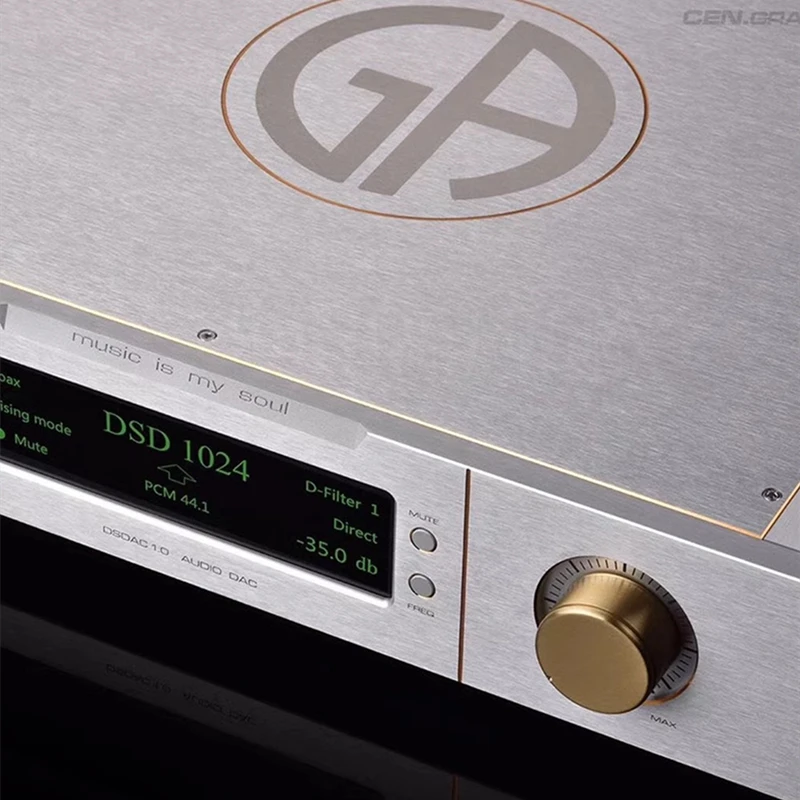
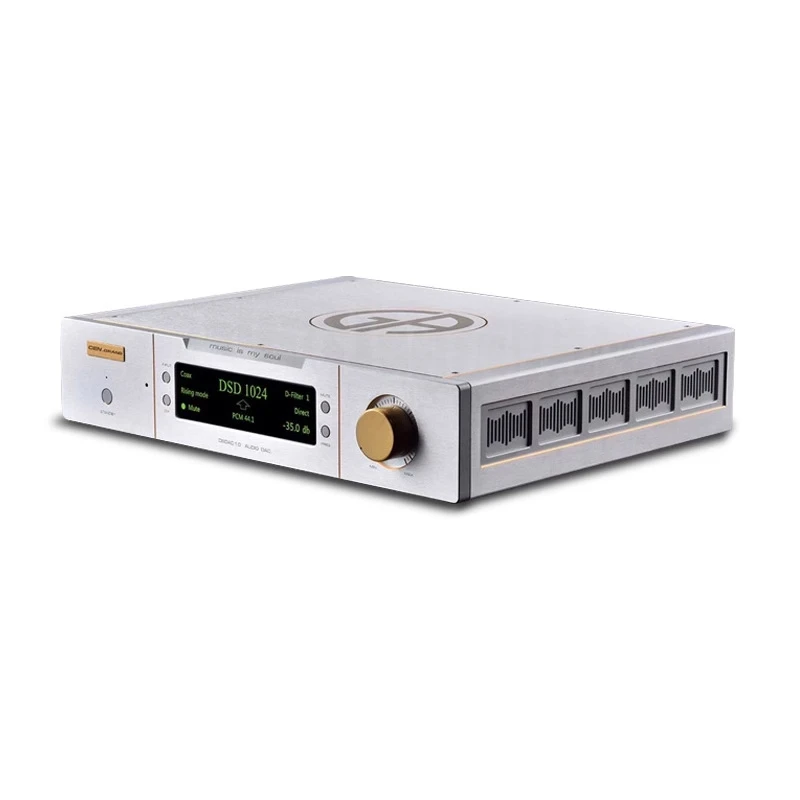
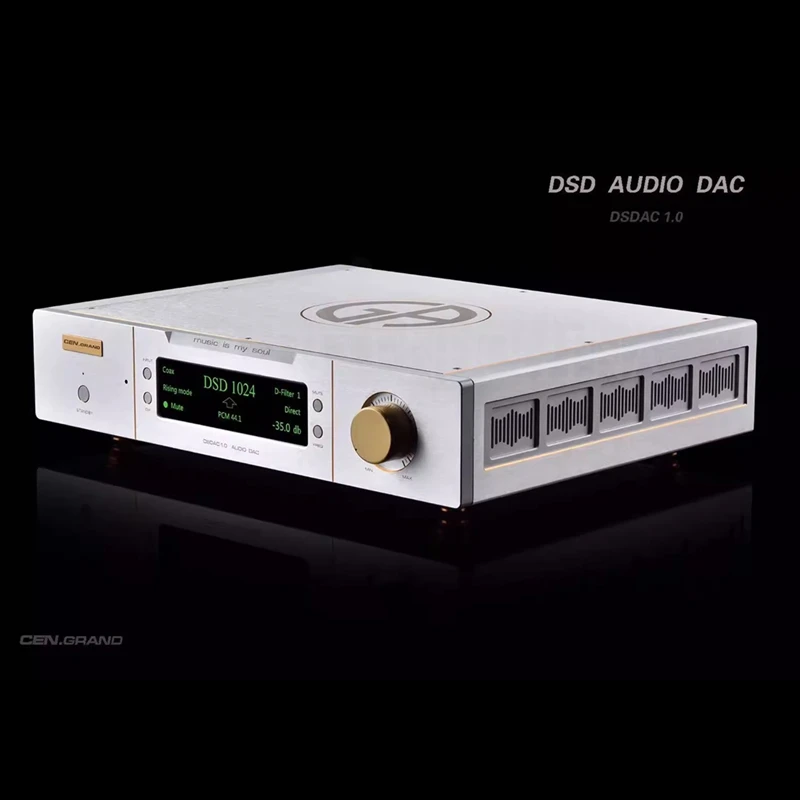

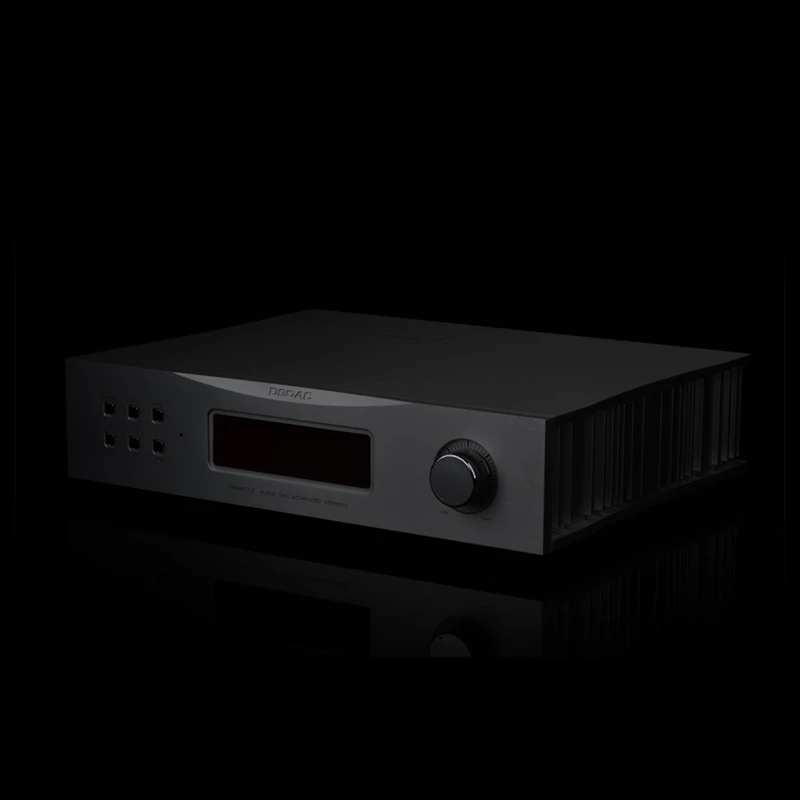



Standard version
Product parameters
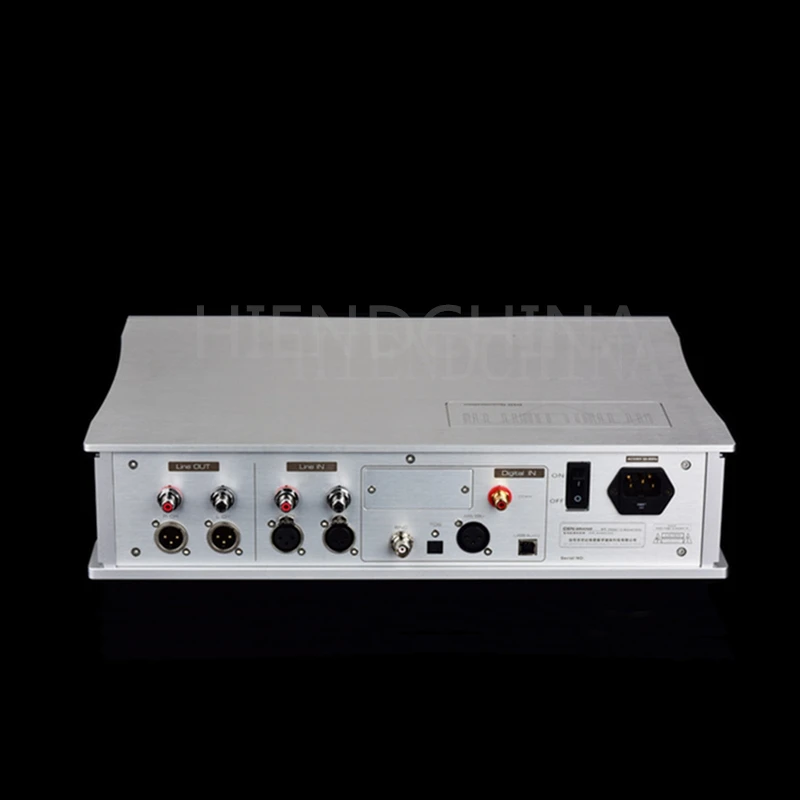
Spdif sampling rate: PCM 192kHz/DOP64 (four sets of inputs for AES, optical fiber, coaxial, and BNC)
USB sampling rate: PCM384/ DSD512 (Native)
Output interface: one group each for XLR and RCA
Output level: 5.0 V RMS (XLR), 2.5V RMS (RCA)
Volume control range: -70dB0dB
Dimensions: 430*360*100mm
Weight: 11kg
High sampling is the solution for DSD audio, which is completely different from PCM upscaling: PCM upscaling is a "out of nothing" operation, while DSD upscaling is a means of reducing noise and improving accuracy. CEN · GRAND has made a breakthrough in the frequency up algorithm, achieving lossless frequency up, maintaining synchronization with international high-level, and being in a leading position. At the same time, the two technologies of "clock blocking" and "synchronous direct clock" are CEN · GRAND, which is a breakthrough in the industry.
Upfrequency algorithm
The upsampling algorithm is the core and technical difficulty of DSD upsampling, and it can usually be resampled after converting to PCM. However, this algorithm has a significant loss and goes against the purpose of upsampling
After several years of exploration, CEN · GRAND's frequency up algorithm has established a new algorithm standard based on basic mathematical theory, achieving a fully accurate frequency up method.
This technology has given DSD audio a wider development space, keeping pace with the world's cutting-edge HiFi technology and leading the way.
Synchronous direct clock
In order to improve clock performance, audio decoders usually use femtosecond oscillator or external clock to synchronize the turntable with the decoding method
However, both methods failed to fully utilize the performance of femtosecond clocks, as femtosecond clocks were not directly input into the DA conversion link of the decoder. So, the practice of using only femtosecond oscillations is more of a concept, and the actual effect may not necessarily be at the femtosecond level
The femtosecond clock inside DSDAC is directly input to the shift memory of the decoder, enabling femtosecond performance to be directly achieved on analog output.
It should be noted that this is not ASRC, it was based on the algorithm of the Century Gray family that it was implemented
Clock blocking
This technology is the dream of digital audio. Allowing the DAC to use a local clock to maintain synchronization while avoiding the costly ASRC method was a fantasy before, but after the emergence of Century Gray's DSDAC, this fantasy became a reality.
The so-called "clock blocking" is when the clock coming from the front end is discarded, and the DAC only uses the local clock. The performance of the front-end turntable will become unimportant, as long as there are no errors in the data, the quality of any audio source will be the same
This technology based on "synchronous direct clock" is a significant creation for the HiFi field, solving the long-standing clock problem in the digital audio field.
Technical support
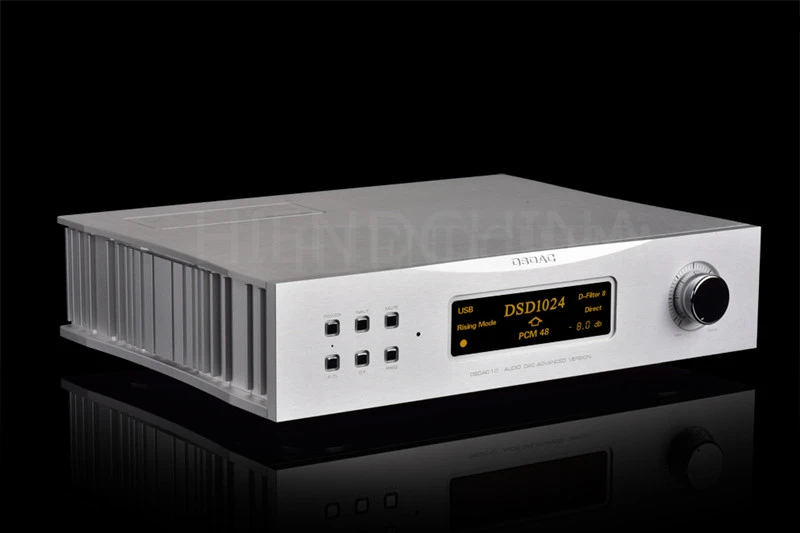
1. It is an upshift algorithm. The working mode of DSDAC1.0 is to upshift the input signal, whether it is PCM or DSD, to DSD, then DAC to analog signal, and upshift to DSD1024, supporting DSD512/PCM384 input. After frequency up, the DSD increases the noise and increases the density of the sound, which is a positive operation
2. Clock blocking technology. The essence of "clock blocking" is that the clock coming from the front end is discarded and the DAC only uses the local femtosecond clock. Therefore, the performance of the front end clock no longer has any impact on the DA decoding process. As long as there are no errors in the data, the audio source has the same quality, reducing the system's dependence on the performance of the front end turntable.
This technology is of great significance for the HIFI audio field. SDAC's clock synchronization algorithm solves the clock problem that has long plagued the digital audio field. 3. Synchronous direct clock technology. Most DACs use femtosecond clocks as their clock source and require frequency division before they can participate in the DA process. After being divided by the frequency divider, the femtosecond clock will increase its jitter, which can basically turn the femtosecond clock into a picosecond clock. Therefore, using a femtosecond clock as the clock source mode can only allow you to use picosecond level performance. The clock system of DSDAC directly sends femtosecond level clocks into the shift register of DA, allowing the DA process to truly use femtosecond clocks and reflecting femtosecond performance in the digital to analog conversion process.
Good USB interface, NATIVE method for obtaining DSD source code
As a DSD decoder, the input of the DSD source code is a necessary function. DSDAC1.0 has two ways to input DSD source code: one is to input DSD64 through coaxial DOP mode, and the other is to input DSD512 in NATIVE mode through USB. The USB interface of DSDAC1.0 adopts XMOS's XU208 scheme and has FPGA ground isolation function, achieving ground separation from front-end devices and reducing front-end interference. At the same time, Century Gray customized the XMOS driver and implemented DSD512 transmission in NATIVE mode, which is a direct way to transmit DSD source code
Musical Analog Circuit Design
DSDAC1.0 has advanced technology in the field of digital audio, but the advancement of digital technology requires the support of high-performance analog circuits to fully reflect the analog part of DSDAC1.0. After long-term optimization design, the output module adopts high-speed and high-performance fully discrete device design, mainly composed of low noise devices, and references multiple international * end brands, achieving quite high performance, Not only does it have outstanding performance in terms of sound quality, but it also reaches a high level of musicality, making it a good product that combines both musicality and sound quality.
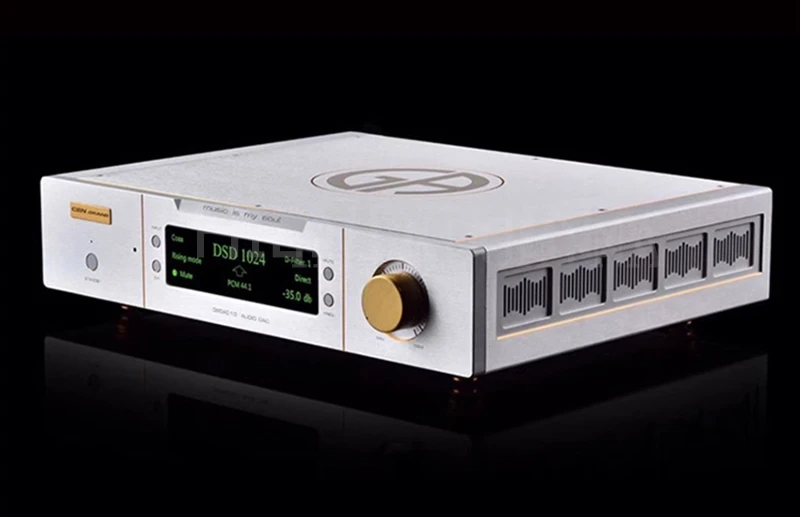
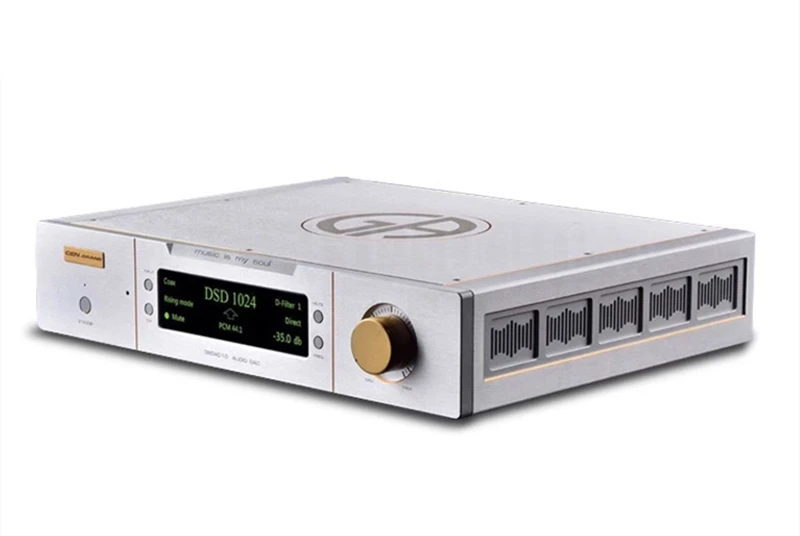
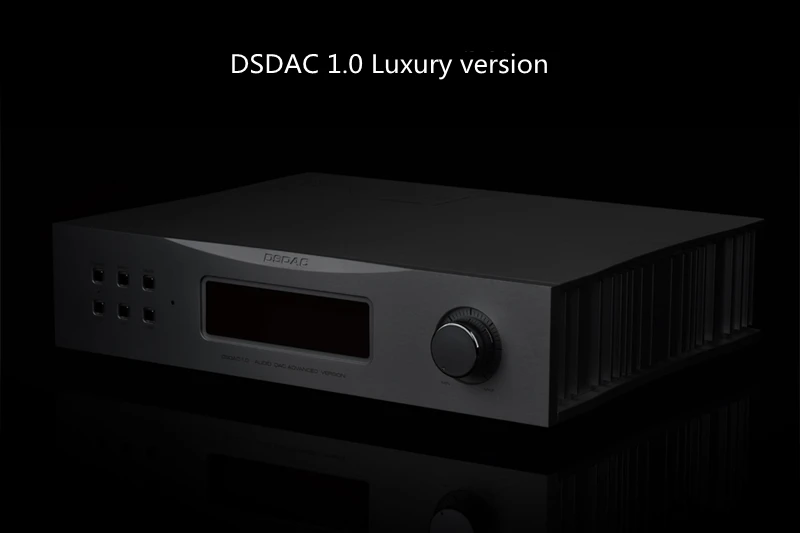
Luxury version
Product parameters
Spdif sampling rate: PCM 192kHz/DOP64 (four sets of inputs for AES, optical fiber, coaxial, and BNC)
USB sampling rate: PCM384/ DSD512 (Native)
Output interface: one group each for XLR and RCA
Output level: 6.2 V RMS (XLR), 3.1V RMS (RCA)
Volume control range: -65dB+4dB
Dimensions: 430*360*100mm
Weight: 12kg







Related Products





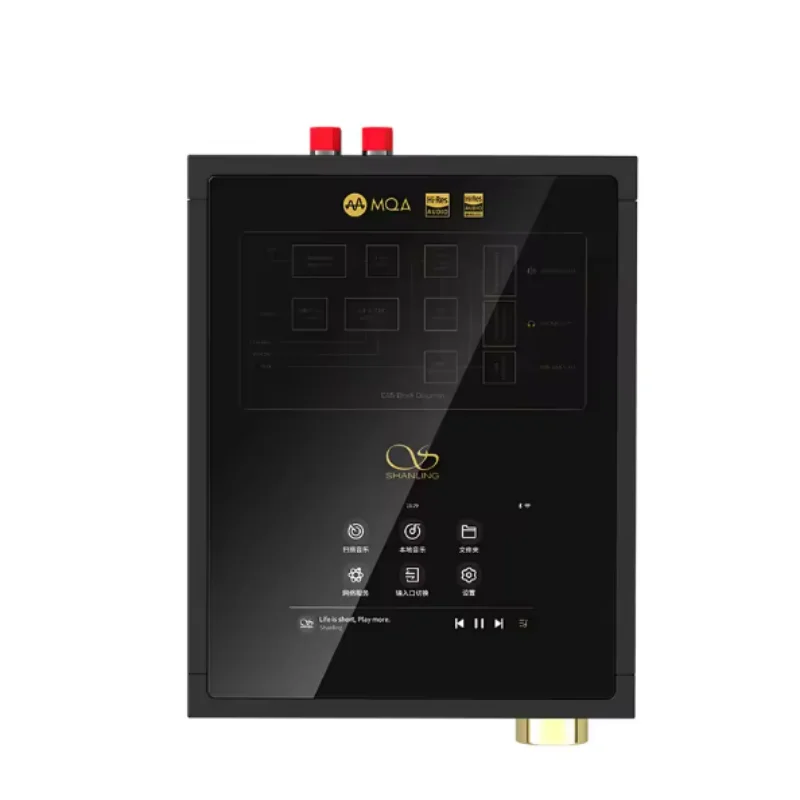


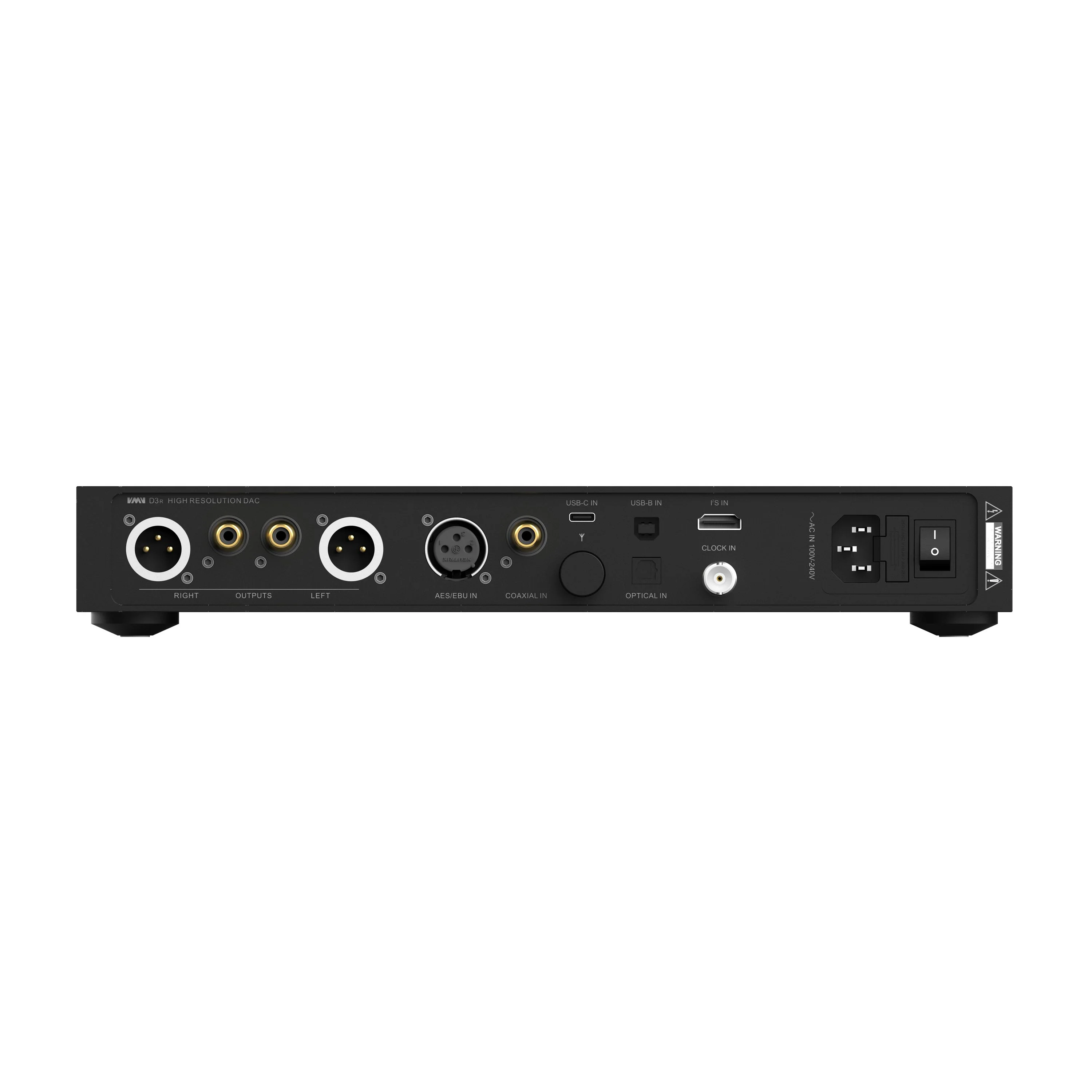
SMSL D3R Desktop Balanced DAC Hi-Fi Audiophile Digital-to-Analog Converter with XLR Output for High-Resolution Audio
Original price was: $1,818.85.$1,399.00Current price is: $1,399.00.

 Silver
Reviews
There are no reviews yet.